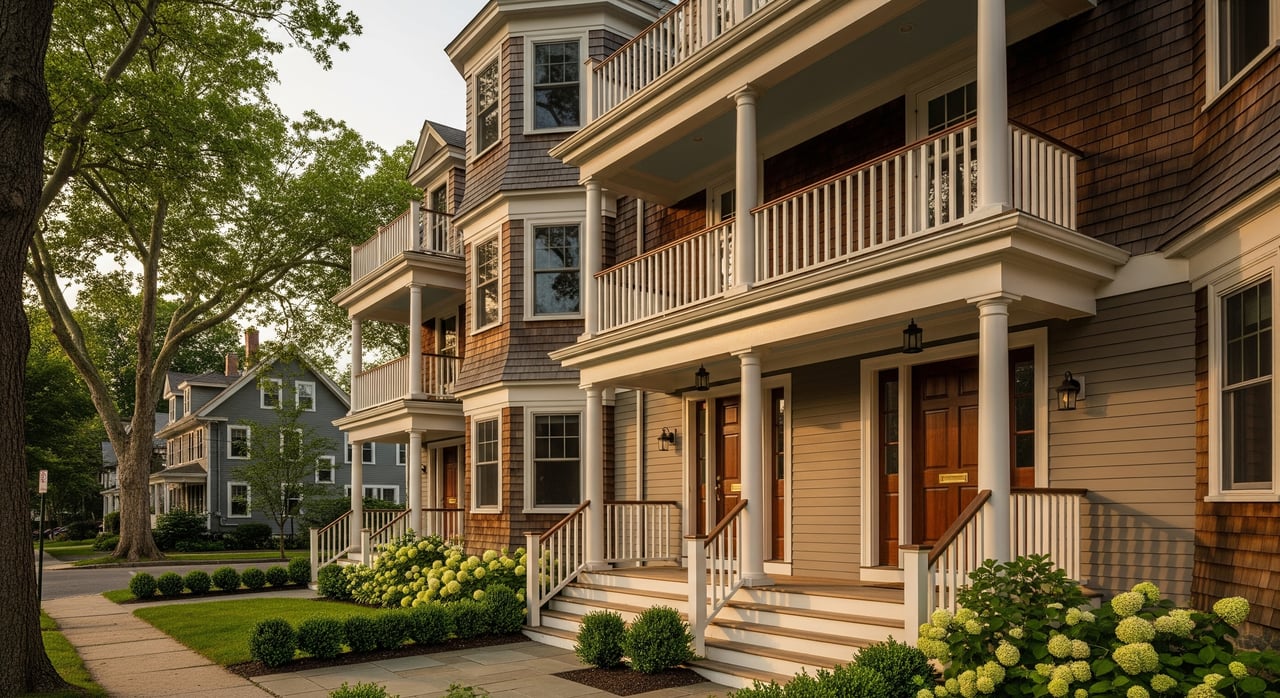
Financing Owner-Occupied 2–4 Unit Homes in Methuen
January 1, 2026
January 1, 2026
Thinking about house-hacking a Methuen duplex, triple-decker, or fourplex to boost affordability? You are not alone. Buying a 2–4 unit home you live in can open doors to financing choices and rental income that support your monthly budget. In this guide, you will compare FHA, conventional, and MassHousing options, see how lenders use rents to qualify you, and review Methuen-specific steps so you can move forward with confidence. Let’s dive in.
FHA financing is popular for owner-occupied 2–4 unit properties because of its low minimum down payment. You can often put down about 3.5% with qualifying credit. FHA is generally more flexible on credit history and debt-to-income than many conventional options. You will pay an upfront mortgage insurance premium and ongoing annual mortgage insurance, and the property must meet HUD minimum property standards.
Conventional loans can offer competitive rates and mortgage insurance costs for borrowers with stronger credit and larger down payments. Standard conventional options work well with 10% to 20% down, and there are lower-down programs like HomeReady or Home Possible for eligible buyers. Lenders often accept a portion of market rents from non-owner units, commonly 75%, to help you qualify.
MassHousing is a Massachusetts program that pairs low down payment mortgages with down payment or closing cost assistance for eligible buyers. Many programs allow 2–4 unit owner-occupied properties, but rules vary by program. Income limits, homebuyer education, and minimum credit score requirements may apply. Check current program details with a MassHousing-approved lender.
Local banks and credit unions sometimes offer portfolio loans that fall outside standard agency rules. These can be helpful if the building is older, needs repairs, or your profile is unique. Terms vary by lender, so compare carefully.
Owner-occupied loans require that you live in one unit as your primary home, often within about 60 days after closing. FHA commonly allows 3.5% down with qualifying credit, while conventional options often expect stronger scores, especially for 2–4 unit properties. MassHousing requirements vary by program, so verify eligibility with a participating lender.
Lenders typically use 75% of the gross market rent from the units you do not occupy as a rent offset in your qualification. If units are vacant, an appraiser’s rent schedule can provide market rent estimates. If units are leased, lenders usually request copies of current leases and recent rent receipts. Some programs may also consider documented rental history from your tax returns.
Your debt-to-income ratio is a key driver of approval. FHA often targets a total DTI near 43%, with potential flexibility for strong borrowers. Conventional limits vary, sometimes up to about 50% with a strong profile or automated approval. Expect to show reserves for multi-unit loans, commonly 2 to 6 months of full housing payments depending on program and your overall file strength.
FHA appraisals must confirm HUD habitability standards. Safety issues, nonfunctioning systems, or significant damage usually must be repaired before closing. Conventional appraisals also assess safety and livability. In Methuen and nearby Merrimack Valley towns, many multi-families are older, so plan for a thorough inspection of roof, foundation, wiring, plumbing, heating, and potential lead paint.
FHA loans require an upfront mortgage insurance premium and annual mortgage insurance that is added to your payment. Conventional loans require private mortgage insurance when you put less than 20% down, with the cost based on factors like credit and down payment. Multi-unit owner-occupied policies and landlord liability coverage are usually higher than single-family homeowner policies, so obtain quotes early.
Loan limits change each year and are higher for 2–4 unit properties than for single-unit homes. FHA and conventional loan limits are set by county, so you will want the Essex County numbers when buying in Methuen. Confirm current limits with your lender.
Your monthly payment depends on the property’s assessed value and the Methuen tax rate. Verify tax estimates with the Methuen Assessor’s Office. When modeling cash flow, include taxes for the whole property in your numbers.
Some Massachusetts cities require rental registration, inspections, or certificates of occupancy for multi-family homes. Check with the City of Methuen building or health department for requirements and timing. If the property needs work to comply, plan your budget and timeline accordingly.
Many Methuen and Merrimack Valley multi-families are older and can have deferred maintenance. You should expect a detailed home inspection that covers mechanicals and safety items, as well as potential lead paint and fuel storage issues. These findings can affect your loan approval and closing timeline.
Request quotes for an owner-occupied multi-family policy and appropriate liability coverage. If utilities are not separately metered, your operating costs may be higher. Review Massachusetts landlord-tenant rules on security deposits, notices, and lead paint compliance before you purchase.
Use multiple sources to estimate market rent, including local listings and the appraiser’s rent schedule. Be conservative when projecting vacancy and maintenance. Remember, the lender commonly uses 75% of market or actual rent to calculate a qualifying offset.
Below are illustrative scenarios to show how rental income and costs interact. Use current rates, taxes, insurance, and rent comps for your specific property.
Assumptions:
Illustrative monthly math (FHA example):
Takeaway: The rent from the second unit can materially improve your debt-to-income. Your actual monthly cash flow will depend on your final PITI including FHA mortgage insurance, utilities, maintenance, and vacancy.
Assumptions:
Rent offsets used for qualifying:
Considerations: A stronger reserve requirement is likely for three units. Operating costs may be higher in older triple-deckers, so budget for heating, repairs, and capital improvements.
With three rented units, the rent offset can be significant, which may help with DTI. Expect stricter underwriting, more reserves, and close attention to leases, condition, and your management plan. Discuss program fit and reserves with your lender early in the process.
Work with a lender experienced in 2–4 unit owner-occupied loans. Ask how they treat rental income, what percentage of rent they use, and what reserves they require. Request side-by-side quotes for FHA, conventional, and MassHousing that include estimated mortgage insurance, rate, fees, and reserves.
Confirm current FHA and conforming loan limits for Essex County. Review eligibility if you plan to use a lower-down conventional program or MassHousing assistance. Complete required homebuyer education if needed.
Order a multi-family focused home inspection. If using FHA, expect the appraisal to reference HUD property standards. Collect leases and rent rolls from the seller. Get insurance quotes for an owner-occupied multi-family policy. Check with Methuen’s building and health departments for rental registrations, inspections, and certificates of occupancy.
Gather pay stubs, W-2s, tax returns, bank statements, evidence of reserves, and any gift or assistance documentation. If you already own rentals, have Schedule E ready. This speeds up underwriting and helps prevent delays.
Lean on a lender who regularly closes 2–4 unit owner-occupied loans, and a real estate professional who understands local multi-family stock and rental dynamics. A real estate attorney and an appraiser with multi-family experience can protect your interests.
| Program | Minimum down payment | Typical credit expectation | Uses rental income | Typical reserves | Property condition standards |
|---|---|---|---|---|---|
| FHA | Commonly about 3.5% with qualifying credit | More flexible than many conventional options | Yes, lenders often use about 75% of non-owner unit rent | Often higher for 2–4 units | Must meet HUD minimum property standards |
| Conventional | Often 5% to 20%+, with certain programs as low as 3% for eligible buyers | Stronger credit usually required for multi-units | Yes, often about 75% of non-owner unit rent | Commonly 2 to 6 months for 2–4 units | Safety and habitability reviewed by appraisal |
| MassHousing | Low down payment options, plus potential assistance for eligible buyers | Program-specific | Often allowed per agency and program rules | Program-specific | Follows agency and lender requirements |
Owner-occupying a 2–4 unit property in Methuen can be a smart path to stable housing and long-term wealth. The key is to line up the right financing, understand how rental income affects qualification, and plan for the realities of an older New England multi-family. With a clear strategy and the right team, you can purchase with confidence and manage your new home like a pro.
If you want a side-by-side review of FHA, conventional, and MassHousing options for a specific Methuen property, schedule a friendly strategy call with Juan Concepcion.
Stay up to date on the latest real estate trends.


Whether you’re buying or selling, I’m here to guide you through every step of the process. With personalized service and a deep understanding of the market, I’ll ensure your real estate experience is smooth and successful.