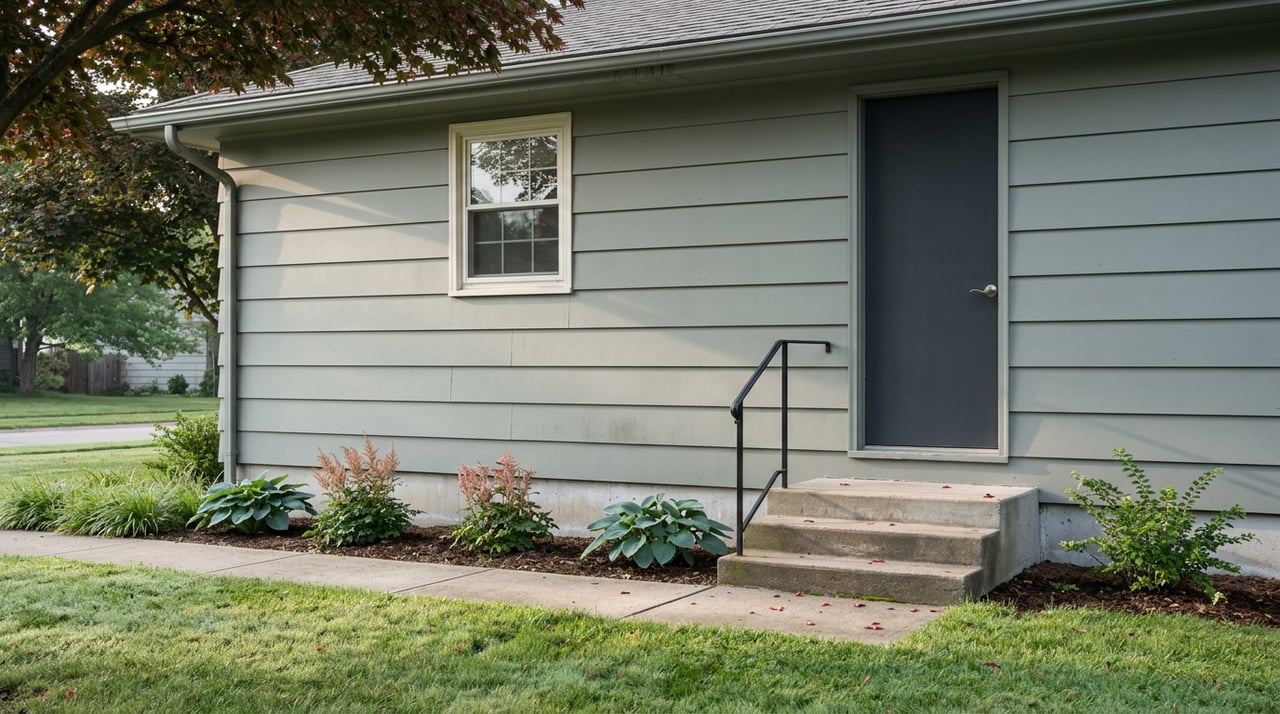
The Billerica Septic Question That Doesn't Stop At A Passing Title V Inspection
August 27, 2026
August 27, 2026
Say a homeowner on one of Billerica's older side streets off Allen Road gets a Title V inspection done before listing this fall. The system passes. No leach field failure, no cracked distribution box, nothing flagged. In most Massachusetts towns, that's the end of the septic conversation. The seller lists, the buyer's lender sees a clean report, everyone moves on.
In parts of Billerica right now, that passing report is only half the story.
Billerica's Department of Public Works reports that about 85 percent of the town's residents are already connected to the municipal sewer collection system, which runs more than 200 miles of pipe through 23 pump stations to the treatment plant in North Billerica. That leaves roughly 15 percent of the town still relying on private septic systems, which is a meaningful slice given how many households that represents.
What makes Billerica different from a lot of suburban Massachusetts towns is that this 15 percent isn't a stable, unchanging group. The town has been running discrete, numbered sewer extension contracts for years, methodically converting septic-dependent streets to municipal service one project at a time. Anyone shopping or selling on private septic here needs to know whether their street is sitting quietly outside that process or standing right in the middle of it.
Under Massachusetts' Title 5 regulations, a septic system inspection completed within two years of a sale, or three years if the system has documented annual pumping, is generally valid for closing. The inspector checks the tank, the distribution box, and the leach field, and reports a pass, a fail, or a conditional pass that requires specific repairs before the system is considered compliant. If a system fails, the state's own guidance lays out two common paths: the seller completes the repair before closing with sign-off from the local Board of Health, or the parties agree to an escrow holdback so the work happens after the sale. Not every lender allows that second option, which is worth confirming early rather than discovering during underwriting.
All of that is standard statewide Title V mechanics, and it answers exactly one question: does the septic system, as it exists today, function well enough to protect public health. It says nothing about whether that system is scheduled to become irrelevant a year or two after closing because the street it sits on is about to get a sewer main.
Billerica's most active current sewer extension is Sewer Contract 37, covering the Webb Brook and Allen Road neighborhoods. The town's engineering consultant, BETA Group, has been designing this extension so the new sewer main can be built alongside the ongoing Allen Road Reconstruction project rather than tearing the road up twice. That reconstruction work was awarded to J. Tropeano, Inc. in June 2022, broke ground that summer, and appears on the town's own project page with a listed construction completion of fall 2026, which puts the timeline for sewer availability on that corridor squarely in view for anyone listing or buying there this year or next.
The streets named in the Contract 37 area go beyond Allen Road itself: Battcock Road, Ravine Road, Dell Hollow Road, Sylvan Road, Riverdale Road, Whittemore Terrace, Intervale Road, Marshbrook Road, Devonshire Drive, Scroxton Drive, Arcadia Road, Rural Avenue, Garden Brook Road, Webster Lane, Wentworth Drive, and Winsor Road. If a property sits on one of these, the septic status a buyer sees today may not be the septic status they inherit.
This isn't theoretical. Billerica has already run this exact process to completion on a different corridor. Under an earlier project, Sewer Contract 35, the town notified homeowners on Allen Road, Brookdale Circle, Ichabod Lane, Nickerson Drive, Jobe Lane, Putney Circle, Shane Lane, and Woodcrest Circle that sewer main construction was finished and service was available for connection. That notice pointed straight to the mechanism that matters here: under the town's sewer bylaw, Article VIII, Section 2, homeowners get one year from the date sewer becomes available to connect, and once they do, the septic system has to be abandoned entirely. No dual systems, no keeping the septic tank as a backup.
A passing Title V and a pending mandatory sewer connection are not contradictory. They can both be true on the same property at the same time. That combination creates a specific kind of friction that a generic septic explainer never mentions, because most towns aren't actively extending sewer into occupied septic neighborhoods on a rolling basis the way Billerica is.
For a seller, it means the honest answer to "is this on septic or sewer" sometimes has a second sentence: yes, septic, currently passing, and also sitting inside a project area where the town has already declared or is about to declare sewer availability. A buyer's attorney is going to ask about that once they see the address, and it's better for the seller to have the answer ready than to have it surface during a title search.
For a buyer, it means a passing Title V isn't automatically the finish line on due diligence in these corridors. If the property is inside an active contract area and sewer becomes available during or shortly after the transaction, the one-year connection clock starts regardless of who owns the house at that point. That clock comes with real costs. New Title V-compliant septic systems generally run from $10,000 to $50,000 or more depending on soil conditions, water table, and whether ledge is encountered, and that's before factoring in a mandatory sewer connection on top of it. A sewer hookup itself carries its own permit cost on the town side (a house service connection permit ran $75 under the earlier Contract 35 notice), plus whatever a licensed drain layer charges to physically run the line from the house to the new stub.
None of this is a reason to avoid buying or selling in these neighborhoods. It's a reason to ask the right question before signing anything, rather than after.
A few calls, made early, settle this:
That last step is where a financially literate approach pays off. Understanding how a mandatory connection deadline interacts with financing, closing costs, and repair budgeting is exactly the kind of planning that turns a surprise expense into a line item both sides saw coming.
If my Title V already passed, do I still need to worry about a sewer project on my street? The Title V report and the sewer connection requirement are separate obligations. A passing inspection satisfies the state's transfer requirement. It doesn't exempt a property from the town's one-year connection bylaw once sewer becomes available on that street.
What if I sell before the connection deadline hits? The obligation runs with the property, not the original owner, so a buyer closing during that window inherits whatever time is left on the one-year clock. Spelling this out in the purchase agreement avoids a dispute later.
Is this specific to Billerica, or common across Massachusetts? Title V itself is statewide. The active, named sewer extension projects with a hard one-year connection deadline are a Billerica-specific detail tied to its ongoing Comprehensive Wastewater Management Plan, which is why it's worth checking directly with the town rather than assuming a septic system's status is settled once and for all.
If you're weighing a sale on septic in Billerica, or looking at a home in one of these corridors and want to know exactly where it stands before you write an offer, Juan Concepcion can walk through the timeline, the financing implications, and what to ask the town before you commit to a date. Schedule a consultation and get the specifics for your address before they become a surprise at closing.
Stay up to date on the latest real estate trends.

Whether you’re buying or selling, I’m here to guide you through every step of the process. With personalized service and a deep understanding of the market, I’ll ensure your real estate experience is smooth and successful.