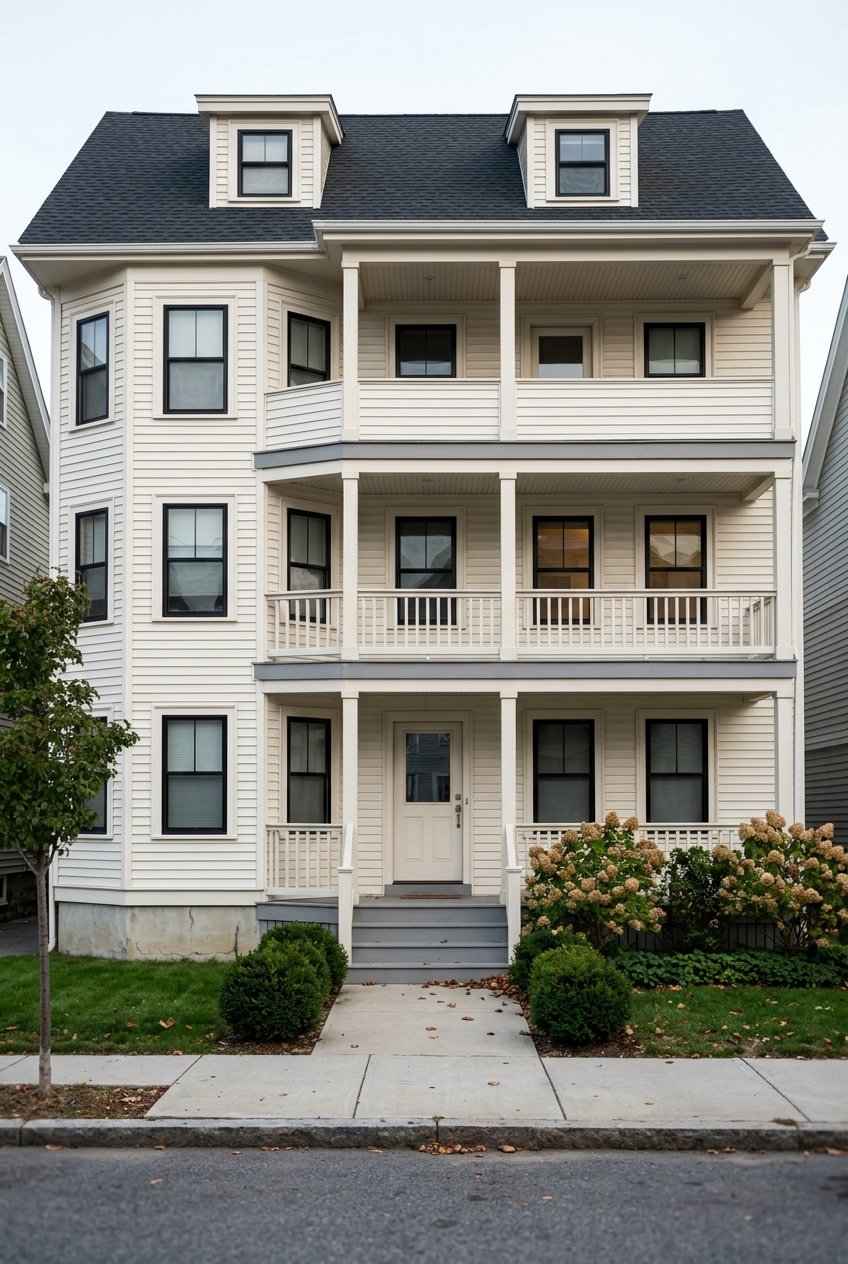
Lawrence MA House Hacking for Multi-Family Buyers
June 4, 2026
June 4, 2026
Looking for a way to buy in Lawrence without carrying the full housing payment alone? House hacking with a 2 to 4 unit home can be a practical path if you want to live in one unit and rent the others. When you understand the numbers, local rules, and financing basics, you can make a smarter decision with fewer surprises. Let’s dive in.
Lawrence offers a setup that naturally gets many buyers thinking about multi-family living. Census data shows an owner-occupied housing rate of 28.1%, a median gross rent of $1,662, and median monthly owner costs with a mortgage of $2,207. That does not guarantee a good deal, but it does show why offsetting your payment with rent can matter here.
Lawrence also had 89,143 residents and 33,714 housing units in recent Census Bureau data, with a median household income of $62,061. The city has a large multilingual and immigrant population, with 44.6% of residents foreign-born and 83.2% identifying as Hispanic or Latino. For many buyers, especially first-time buyers and value-focused households, a live-in multi-family can be a strategy that supports both housing stability and long-term planning.
House hacking usually means buying a 2 to 4 unit property, living in one unit as your primary residence, and renting the other unit or units. The goal is to use rental income to help cover your monthly housing costs. In the best-case scenario, you lower your out-of-pocket payment while building equity.
This approach can appeal to both first-time buyers and small local investors. You get the benefits of owner-occupied financing options, while also learning how a small income property works in real life. That combination is one reason multi-family homes remain attractive in Lawrence.
If you want to house hack in Lawrence, owner-occupied financing is often where the conversation starts. HUD says FHA loans can be used on 1 to 4 unit properties, and the down payment can be as low as 3.5%. That lower entry point can make a big difference if you are trying to buy your first multi-family home.
Conventional financing may also be an option. Fannie Mae’s HomeReady mortgage is available for 1 to 4 unit principal residences, and its matrix shows that 2 to 4 unit principal residences can qualify with no borrower contribution at 80% loan-to-value or less, and a 3% borrower contribution above 80%. The same program also includes an 80% area median income cap.
There is one important detail many buyers miss. For 2 to 4 unit principal residences, eligible rents generally must be reported, but rent from the unit you live in usually cannot be used to qualify. In simple terms, the lender may give value to the rent from the other units, but not to the space you personally occupy.
If you are shopping for a three-family or four-family property with FHA financing, pay close attention to the self-sufficiency test. HUD requires projected rental income from the property, after vacancy and maintenance adjustments, to be enough to support the mortgage payment. That means the building has to work on paper in a more meaningful way than many buyers expect.
This rule does not mean a three-family or four-family purchase is off the table. It simply means you should review realistic rents and conservative expense assumptions early. That is where strong local guidance can save you time.
The biggest mistake in house hacking is treating rent like pure profit. Advertised rent is gross rent, not spendable cash flow. Before you assume the other units will cover the mortgage, you need to account for vacancy, repairs, insurance, property taxes, and local fees.
Lawrence’s numbers help frame the conversation. The city’s median gross rent is $1,662, while median monthly owner costs with a mortgage are $2,207. Those figures suggest rental income can make a meaningful dent in your monthly cost, but only if the property is underwritten carefully.
Fannie Mae notes that closing costs commonly run about 2% to 5% of the purchase price. If you put less than 20% down on a conventional loan, you may also pay private mortgage insurance. On top of that, your monthly payment may include principal, interest, and escrow for taxes and insurance.
Property taxes deserve close attention in any Lawrence multi-family analysis. The FY2026 residential tax rate is $8.64 per $1,000 of assessed value. That recurring expense should be built into your monthly estimate from day one.
A property can look affordable at first glance if you focus only on list price and projected rent. But once taxes are layered into the payment, the numbers may feel very different. This is why buyers should review full monthly carrying costs, not just mortgage principal and interest.
In Lawrence, ownership comes with city compliance requirements. The city’s rental unit inspection ordinance requires owners of private residential rental units to register annually by March 31. The fee structure includes an initial $25 fee and a $15 annual renewal fee per unit, capped at $1,500 per building.
There is also an inspection framework to understand. Dwellings with three or fewer rental units, where one unit is occupied by the owner, are exempt from inspection requirements. Non-exempt units are inspected at least once every three years.
That exemption can matter for some house hackers, but it does not remove the need for due diligence. Lawrence’s ordinance makes compliance part of the ownership picture, not just something to think about after closing.
Before you move forward on a 2 to 4 unit property, it helps to verify key items such as:
Many multi-family homes in Massachusetts were built before 1978, so lead compliance should be part of your review from the beginning. Massachusetts Lead Law requires lead hazards to be removed or covered in homes built before 1978 when children under 6 live there. The state also requires lead notification in sales of pre-1978 homes.
If a child under 6 will live in the home, the owner must have it deleaded or brought into interim control within 90 days of taking title. For a buyer planning to occupy one unit with family, this is a serious issue to understand before closing. It is especially important in older multifamily housing stock, where lead risk may be more likely.
If your plan includes tenants, your rental practices must follow fair housing rules. Massachusetts guidance warns landlords and agents not to use discriminatory language in rental ads, including phrases like “No Section 8” or “No Children.” Lawrence’s ordinance also requires owners to attest that they understand federal, state, and local fair housing obligations.
For you as a buyer, this means landlording starts with compliance, not just collecting rent. The right setup includes lawful advertising, consistent screening, and a clear understanding of your responsibilities. That is part of protecting both your investment and your peace of mind.
A Lawrence multi-family can be a strong fit if you want to lower your personal housing cost, build equity, and take a practical first step into real estate investing. It can also work well if you value owner-occupied financing options and want a property that serves both as a home and an income-producing asset. Still, the best opportunities are usually the ones that hold up under careful review, not just optimistic math.
This is where local knowledge matters. You want to look beyond the listing photos and ask whether the rent assumptions, tax burden, city compliance, and property condition all support your goals. When you approach house hacking with clear numbers and a realistic plan, you put yourself in a much stronger position.
If you want help evaluating Lawrence multi-family homes with financing, affordability, and long-term strategy in mind, Juan Concepcion can help you take the next step with clarity.
Stay up to date on the latest real estate trends.




Whether you’re buying or selling, I’m here to guide you through every step of the process. With personalized service and a deep understanding of the market, I’ll ensure your real estate experience is smooth and successful.