What Riverfront Living Feels Like In Lawrence
June 11, 2026
June 11, 2026
Are you picturing a quiet waterfront retreat when you think about riverfront living? In Lawrence, the experience is something different, and for many buyers, that is exactly the appeal. You get historic character, public green space, downtown convenience, and a daily rhythm shaped by both the Merrimack River and the city around it. If you are wondering what it really feels like to live near the river here, this guide will help you picture the setting, the housing, and the lifestyle. Let’s dive in.
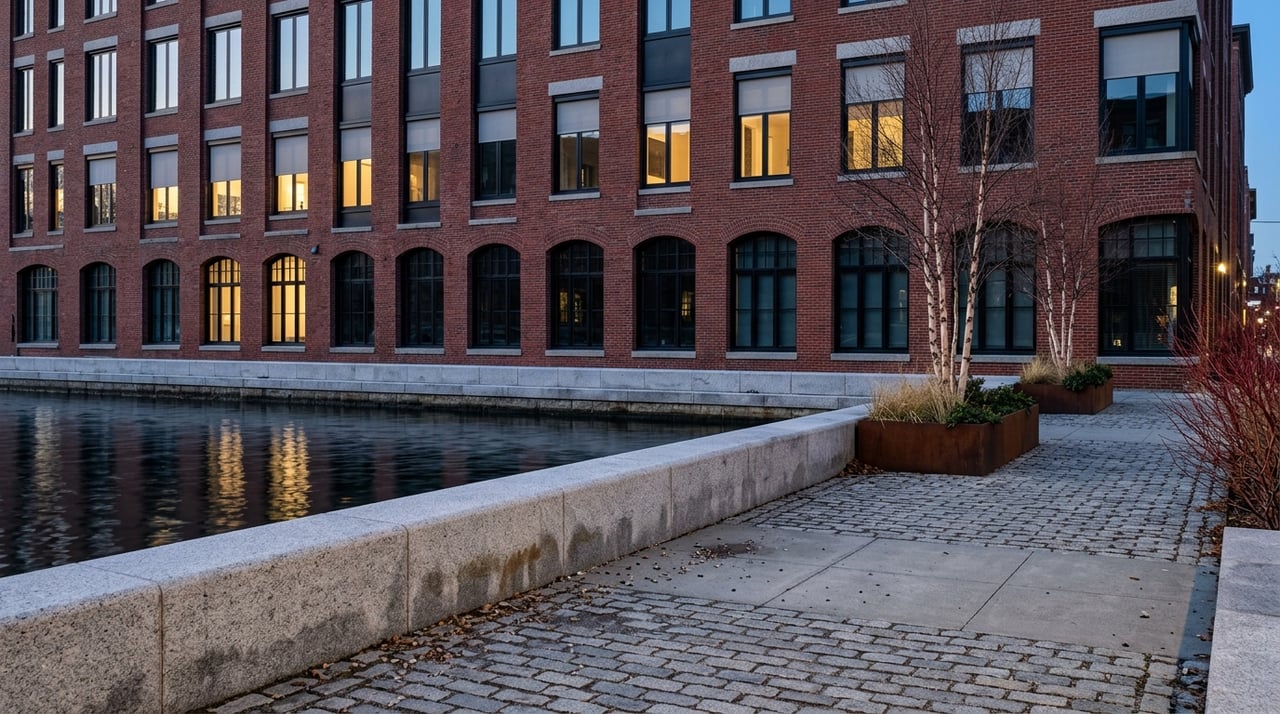
Lawrence sits on the Merrimack River, but the riverfront does not read like a suburban waterfront community. It feels more like a historic urban district with water views, older brick buildings, and a strong connection to the city’s industrial past.
The city highlights the mill buildings along the Merrimack, the Great Stone Dam, and the clock and bell towers as key parts of Lawrence’s identity. State heritage materials also describe Lawrence as one of the nation’s first planned cities. That history still shapes what you see and feel when you move through the area today.
If you are looking for polished waterfront condos in a resort-style setting, this is probably not the match. If you like layered streetscapes, visible history, and a neighborhood that feels connected to downtown life, Lawrence’s riverfront offers a distinct experience.
The river is not just a backdrop here. It helps define the city’s layout, the public spaces, and the overall sense of place.
Lawrence Heritage State Park gives you access to an esplanade beside the Merrimack River while also interpreting the city’s mill-worker history, immigrant settlement, and the 1912 Bread and Roses Strike. Nearby, Riverfront State Park sits directly beside the Merrimack and includes trails, a public boat launch, picnic tables, a playground, basketball courts, and a community boating program.
That means weekends and evenings can feel active and social rather than isolated. You may be near the water, but you are also near parks, public paths, and shared spaces that keep the area lively.
One of the biggest lifestyle advantages of this area is how connected it feels. The riverfront is tied into downtown Lawrence rather than separated from it.
The 3.5-mile Spicket River Greenway links the restored riverfront to downtown and the developing mill districts at both ends. For daily life, that creates a stronger sense of movement between parks, streets, and local destinations. It is one reason riverfront living here often feels practical, not just scenic.
Downtown Lawrence also centers on Essex Street, which the Downtown Lawrence Association describes as the heart of downtown. Restaurants, cafes, entertainment, and shops all help give the area activity beyond normal business hours.
Examples listed by the association include La Grekka Café Art & Lounge, Japu Restaurant, Santias Bakery, Timeless Juice & Smoothies, and Heav’nly Donuts. For you as a resident, that can translate into easier coffee runs, casual meals, and neighborhood errands without needing every outing to feel like a car trip.
If you want a neighborhood that has a regular public-life rhythm, Lawrence’s riverfront has that. The area is shaped by parks, downtown destinations, and recurring community activities.
The city says its farmers market runs every Wednesday and Saturday and offers fresh local produce. Groundwork Lawrence identifies the market as a downtown fixture at North Common, which adds another steady routine to the neighborhood.
That kind of weekly pattern can matter more than people expect. It gives the area a lived-in feel and creates simple ways to enjoy the neighborhood close to home.
Riverfront living in Lawrence does not mean one standard home type. The housing mix is broad, urban, and heavily influenced by adaptive reuse.
Former mills have been repurposed into housing, offices, retail, and artists’ studios. A HUD case study highlights Duck Mill as a 73-unit conversion with commercial space and mixed-use, transit-oriented design, while also noting ongoing work in Everett Mills and the former Wood Mill.
You are also likely to see brick multifamily buildings, townhouse-style developments, walk-up apartments, and scattered-site units nearby. Lawrence Housing Authority properties reflect that broader mix, which reinforces the idea that the area offers a layered city housing stock rather than a single waterfront product.
Here is a simple way to think about the housing landscape:
| Housing type | What it often feels like |
|---|---|
| Converted mill buildings | Historic character, larger-scale brick architecture, mixed-use surroundings |
| Brick multifamily buildings | Urban and practical, often close to downtown streets and services |
| Townhouse-style developments | More traditional residential layout within a city setting |
| Scattered-site units | Part of the broader neighborhood fabric rather than one unified complex |
For buyers, that mix can create options across different budgets and goals. For owner-occupants and small multi-family buyers, it can also mean looking closely at how building style, layout, and location line up with your long-term plans.
Lawrence’s riverfront and mill districts are not frozen in time. They are changing in visible ways, which is part of what makes the area interesting.
The city says it is prioritizing mixed-use development, market-rate housing, small-business growth, brownfield cleanup, and downtown vitality. That points to a neighborhood that is still being shaped, not one that is already fully built out.
One example is DyeWorks. Lawrence CommunityWorks says the project is designed to help turn the Mill District into a vibrant, equitable neighborhood and will bring a full-service Latinx-owned grocery store, an eye clinic, youth programming, and community space when it opens in fall 2026.
Groundwork Lawrence also emphasizes parks, trails, sidewalks, bike lanes, trees, and a farmers market as part of the area’s infrastructure. For you, that can mean a riverfront setting with both historic identity and visible investment in everyday neighborhood function.
A riverfront location can sometimes sound remote, but that is not really the case in Lawrence. The city says Lawrence is only 25 miles north of Boston and is accessible by car, train, bus, or plane.
For local and regional movement, MeVa says its service district is centered on Lawrence, Haverhill, and Methuen, carries 3.4 million riders per year, and is fare-free systemwide. The agency also says Lawrence has seen expanded frequencies, later evening service, and Sunday service.
The Lawrence and Methuen network includes routes such as Essex Crosstown, Lawrence-Haverhill, Andover Square via South Broadway, North Andover/Woodridge, Lawrence Crosstown, Lawrence-Haverhill via Amazon/Ward Hill, and Lawrence-Lowell. That broad network supports a lifestyle where you are not limited to driving for every trip.
The city has also tied downtown revitalization to bus and rail access and the McGovern Transportation Center as a transportation hub. In real life, that helps make riverfront living here feel connected, commuter-aware, and more flexible for different routines.
Lawrence has a strong community identity, and that matters when you think about what it feels like to live here. Census QuickFacts show that 78.1% of residents speak a language other than English at home.
That statistic does not tell the whole story, but it does reflect a city with a multilingual, multicultural everyday character. For many buyers, especially those who value community familiarity and cultural connection, that can be an important part of what makes Lawrence feel comfortable and real.
The riverfront is part of that larger city story. It is not separate from Lawrence’s daily life. It is woven into it.
This setting tends to appeal to buyers who want more than a pretty view. It often fits people who value historic character, shorter local trips, public green space, and access to transit and downtown activity.
It can also be a strong fit if you are open to an area that is still evolving. Lawrence’s riverfront offers a mix of history, infrastructure, adaptive reuse, and public investment that may feel especially appealing if you prefer a neighborhood with momentum and texture.
If you are deciding whether this lifestyle fits your goals, it helps to look beyond the word “riverfront.” In Lawrence, the better question is whether you want an urban neighborhood shaped by the river, not a neighborhood that simply sits beside it.
Before you buy near the river in Lawrence, it is worth thinking about how you want to live day to day. The appeal here is often about convenience, character, and connectivity as much as the water itself.
A few questions can help you narrow your focus:
This is also where financial clarity matters. If you are comparing property types, monthly costs, or long-term plans, having a local advisor who can explain affordability, financing, and the practical tradeoffs can make your decision much easier.
Riverfront living in Lawrence is not one-size-fits-all, but that is part of its strength. It offers a city-based lifestyle with history, public space, transit access, and housing variety that can be hard to find in a more conventional waterfront setting.
If you want help figuring out whether Lawrence’s riverfront matches your budget and goals, Juan Concepcion can help you explore the neighborhood with a clear local and financial lens.
Stay up to date on the latest real estate trends.


Whether you’re buying or selling, I’m here to guide you through every step of the process. With personalized service and a deep understanding of the market, I’ll ensure your real estate experience is smooth and successful.